How Creators Turn Online Presence Into Trust at Scale
In this practical guide, the author argues that for creators, attention is fleeting but trust is the durable currency that converts visibility into predictable revenue. They outline a repeatable approach to building trust at scale, centered on five pillars: authenticity, competence, social proof, verified identity, and consistency, and offer actionable steps: profile hygiene, content mixes that demonstrate results, specific case studies, verification, funnel trust signals, community building, reputation management, and simple metrics to track. The post emphasizes predictable systems, small experiments, and team processes to preserve authenticity as reach grows, and points to tools (like Whoozit) to streamline verification and improve conversion.
If you work in content creation, you've likely experienced the disconnect between getting noticed and being trusted. A single article might get thousands of hits, and one viral moment can seem like a guarantee that everything will fall into place, but sales, loyal customers, and strong relationships seldom happen overnight. It is something I have witnessed frequently. Being visible means sending out signals. Trust is the actual currency that you use to grow your business.
This message is for creators, influencers, coaches, solopreneurs, and digital founders who depend on attention as their main source of income. I will share a practical, repeatable method for building creator online trust and using it to get consistent results. You'll receive frameworks, straightforward examples, and common pitfalls to watch out for. If you're after less luck and more systems, then this is the place for you.
Why trust matters more than attention
Attention is loud and unreliable. Platforms change algorithms. Trends forget you. Trust is what remains. When people trust you, they interact more, buy more, bring in new customers, and overlook your occasional mistakes. Trust is what turns fame into a steady stream of income.
Think of the coach or writer you are most in favor of. The reason you follow them is that they always give value. The reason you buy from them is that you believe they will help you reach your goals
What does trust at scale actually mean?
Trust at scale is the ability to deliver the same reassuring signals to thousands or tens of thousands of strangers. It means your online presence creates a predictable reaction. People who discover you behave similarly. They sign up, they read, they buy, or they recommend. Scale does not mean one to many only. It means one to many with systems that preserve signal quality.
At this level, creators need more than authentic posts and the occasional case study. They need identity signals, proof points, and processes that conserve credibility as reach grows. You need to move from ad hoc trust builders to repeatable practices.
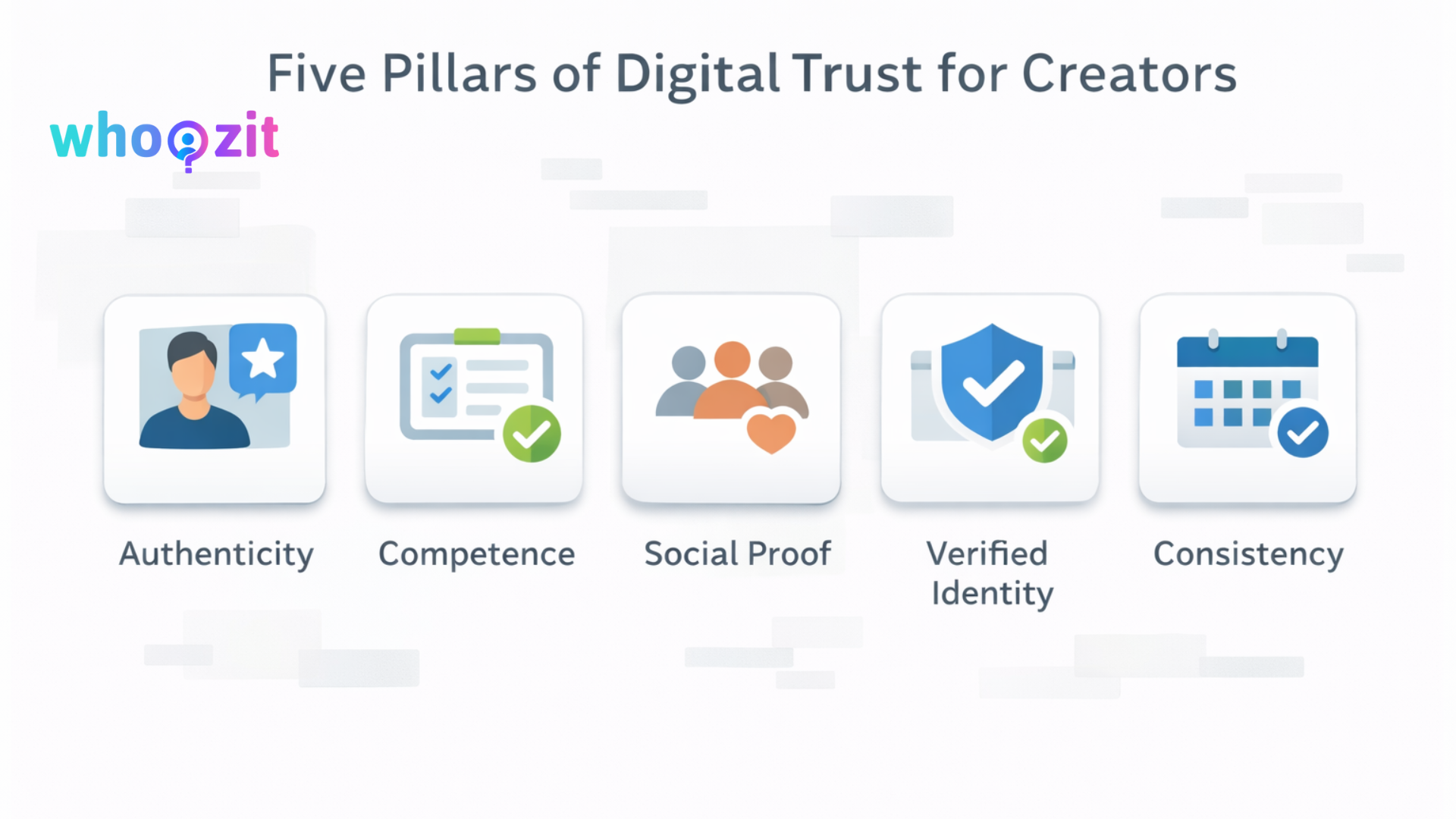
Five pillars of digital trust for creators
From my experience working with creators, trust usually rests on five pillars. If one of these is weak, your conversion rates will suffer no matter how much reach you get.
- Authenticity: People want to feel like they know you. That means clarity about your values, methods, and personality.
- Competence: Demonstrated skill or results. Case studies, teaching, and useful frameworks show you actually deliver.
- Social proof: Testimonials, press, and user results scale credibility fast.
- Verified identity: Proof that you are who you say you are. Verified creator identity reduces friction for buyers and partners.
- Consistency: Reliable content cadence, messaging, and customer experience. Inconsistency creates doubt.
Work on all five. I have seen creators nail authenticity but neglect verification, which slows enterprise partnerships. Others have verification but inconsistent content, so the audience's trust never deepens.

Start with profile hygiene.
Clean profiles are low-hanging fruit. Ask yourself: Does a stranger trust this page enough to click a link or type in an email? If they do not, the rest of your funnel will leak.
Fix the basics first. Use a clear headshot. Add a short, benefit-driven bio. Link to a single landing page that explains who you help, how you help them, and what to do next. Remove outdated links and contradictory statements. Make your value obvious within three seconds.
Small detail example. I once advised a creator who had five different bios across platforms. Each bio made a slightly different promise. Her conversion rate from DMs to clients was low. We unified the message and added a short case study on the landing page. Conversions improved within two weeks.
Craft content that builds credibility, not just applause
Likes and shares feel good. They do not always mean trust. Content that builds credibility answers two silent questions people have when they discover you. First, can you actually help me? Second, is it safe to engage with you?
To answer those questions, mix content formats. Teach with short how tos. Share progress and behind the scenes. Publish one long form piece that shows a complete method. Show results from real people. The mix signals both competence and transparency.
Simple content mix example. Try a weekly cycle: one quick tip post, one case study, one personal story about failure and recovery, and one long post that teaches a framework. Repeat. Over time, this pattern tells your audience that you are reliable and useful.
Make social proof human and specific.
Vague testimonials are weak. Specific outcomes are persuasive. Instead of saying someone loved your program, show what changed. Numbers help. Timeframes help. Names or initials add authenticity.
I prefer short, crisp case studies. One paragraph of setup. One sentence about the action. One sentence with the result. That format is easy to scan, and it scales across social posts, landing pages, and email sequences.
Example case study. A fitness coach helped a client lose 8 kilos in 12 weeks by changing their morning routine and protein intake. The coach shared the client’s simple adherence chart. That one chart communicated competence more than a vague testimonial would.
Verified creator identity is not optional.
As relationships and deals scale, people ask for verification. Brands and platforms look for a signal that you are legitimate. Fans want to know they are not sending money to a ghost. Verified creator identity builds trust at scale because it reduces perceived risk.
Verification can mean many things. Platform verification is one method. Independent verification is another. Public case studies, linked references, or participation in reputable events also help. In my experience, combining multiple identity signals makes a big difference when pitching partners or signing enterprise clients.
Design your funnel around trust signals.
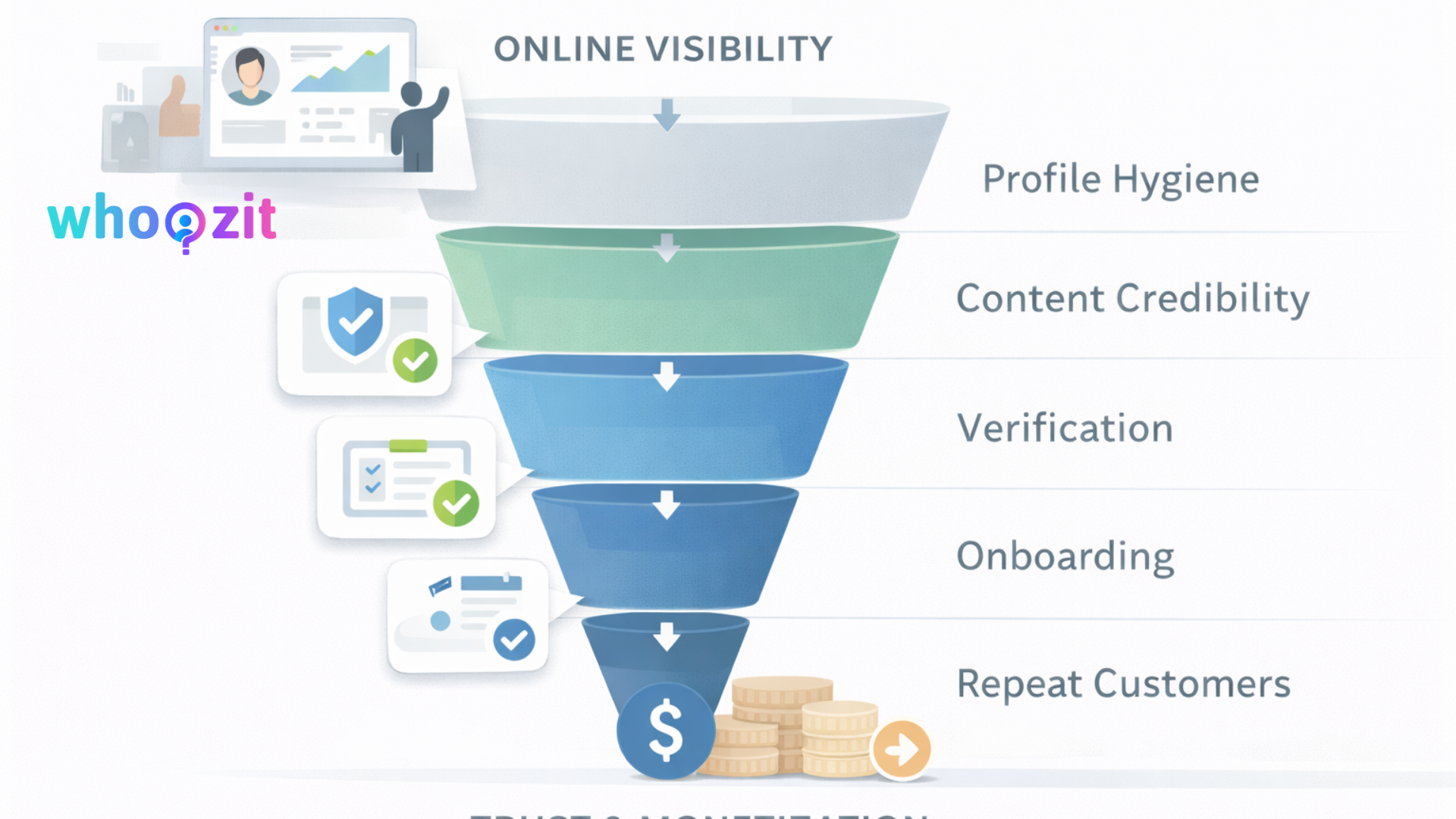
Most creators concentrate on funnel top growth. Naturally, that's a must but still not enough. You should deliberately embed trust signals at every conversion point. Landing pages, checkout pages, welcome emails, and onboarding messages are some of the areas that should reassure and guide your clients.
Consider every interaction point as a chance to smooth the process. Put a small testimonial badge next to the pricing. Display a quick onboarding outline on the product page. Send a welcome email that presents you to the customer and shares the idea of the next steps. All these little gestures help to build a trust ladder that brings good customer retention.
Quick checklist for funnel trust. Use real photos and short bios. Add three short testimonials to landing pages. Include a money back or satisfaction guarantee where appropriate. Use simple steps that explain what happens after purchase.
Be predictable, not perfect.
Predictability builds comfort. People trust predictable creators because they know what to expect. That does not mean you must be perfect. It means your audience sees a pattern and knows how you behave.
I have a simple rule I share with creators. Pick a rhythm you can sustain and stick to it. If you can only publish one long article a month and three short posts a week, do that. Better to be reliably average than inconsistently stellar.
Community is the trust multiplier.
Communities convert visibility into lasting relationships. When people talk about you, they carry your trust into their networks. A healthy community becomes proof that you are credible and useful.
You do not need a million members to get benefits. A small, active group of 200 people can drive real business. Focus on quality interactions, not vanity metrics. Ask members to share wins. Highlight user generated results. Make it easy for people to help each other.
Community example. A solopreneur I know ran a private Slack with 150 paying members. They organized monthly "show and tell" sessions. The sessions produced short clips and testimonials that the creator repurposed across channels. Paying members felt valued and referred new customers.
Handle mistakes openly
Mistakes happen. The smart move is to handle them in a way that preserves trust. Hide a mistake, and you risk losing credibility. Address it quickly and clearly, and you often come out stronger.
Here is a simple pattern I use with creators. Acknowledge the issue. Explain what happened in plain language. State a clear next step to fix it. Then show what you will change to prevent it from happening again. This approach shows competence and care.
Reputation management for creators
Reputation management sounds corporate, but it is just organized care for how you are perceived. Monitor mentions, respond to feedback, and document outcomes. When something goes wrong, your timeline of responses becomes proof of accountability.
Tools help, but discipline matters more. Set a weekly time block to scan mentions and questions. Answer the most important messages within 48 hours. Keep a short shared doc with templates for common responses. You will be surprised by how much trust this builds over time.
Numbers that show trust
We love vanity metrics, but trust deserves better measures. Track metrics that reflect real relationships and outcomes. I recommend the following signals:
- Conversion rate from first contact to purchase
- Repeat purchase rate
- Average customer lifetime value
- Referral rate
- Net promoter score or simple satisfaction surveys
These numbers tell you whether your audience trusts you enough to transact and stay. Watch how these metrics move when you change your messaging, add verification, or improve onboarding.
Scaling trust with teams and partners
At some point, you cannot do everything alone. Scaling trust means delegating tasks that keep signals consistent. Hire people who understand your voice. Create simple playbooks so others can represent you without breaking trust.
Use partners to amplify credibility. Joint webinars with respected people, guest features in trusted media, and collaborations with vetted creators extend trust by association. Choose partners who align with your values and audience.
Simple systems that preserve authenticity
Authenticity can feel fragile when you scale. Systems help you stay authentic without scripting every word. Create a content brief template that includes voice, example phrases, and the values you must reflect. Use it for hires and freelancers.
Another tactic is to set pillars for your content. For example: teach, inspire, and show behind the scenes. Each piece must fall into one of those categories. That rule keeps your content varied and true to your core while being easy to reproduce.
Common mistakes creators make when trying to build trust
Here are the missteps I see most often. I am calling them out so you can avoid them.
- Chasing virality over consistency. A viral post is a boost, not a strategy.
- Using vague testimonials. Be specific about outcomes.
- Ignoring verification. Brands and savvy buyers expect proof of identity and results.
- Over promising and under delivering. Small, reliable wins build long term trust.
- Fragmented messaging across profiles. One promise, many voices is a trust killer.
If any of these sound familiar, pick one to fix this month. Small cumulative improvements outperform grand, one time changes.
Quick, practical steps to start building trust today
If you only do five things this week, do these. They are easy and effective.
- Unify your bio across platforms with one clear value proposition.
- Add three specific testimonials to your landing page and one to your sales page.
- Publish one long form post that teaches a repeatable framework.
- Send a welcome email that introduces you and sets clear expectations for new subscribers.
- Set up a simple tracking sheet for conversion, repeat buyers, and referrals.
Each step directly improves a trust signal. Do them consistently and watch your conversion math change.
Example: A small coach scales trust into predictable income
Here is a compact real world example that I use in workshops. A coach with 4,000 followers struggled to sell 1:1 packages. She had lots of comments but few purchases. We mapped her conversion funnel and found major leaks. Her profiles were inconsistent, her testimonials were vague, and her sales page did not explain the next steps.
We implemented small fixes. One unified bio. Two short, specific case studies on the sales page. One simple onboarding email sequence that set expectations and delivered a quick win. She also added a verified payment method and a short FAQ about refunds.
Result. Within three months, she tripled her close rate and reduced churn. The work was mostly small, but the collective effect was big. Trust was not invented. It was assembled from many small, aligned signals.
How platforms and verification help
Platform verification is useful. It reduces impersonation risk and signals credibility to audiences and partners. But verification alone is not enough. It buys trust at the margin. You still need proof of outcomes and a consistent message to convert buyers.
Independent verification has power, too. Public case studies, reference calls, and interviews on reputable outlets are credibility boosters. I recommend creators stack platform verification with independent proofs for the best effect.
Whoozit and creator trust
Companies like Whoozit help creators scale trust through verified identity and reputation tools. Whoozit focuses on making creator credibility easier to show and manage. If your business depends on verified creator identity or managing an expanding set of trust signals, bringing a tool like Whoozit into your workflow can save time and increase conversions.
In my experience, creators who treat verification as part of their funnel see outsized improvements when pairing it with consistent content and solid onboarding. Consider verification as one of the pillars of your trust architecture.
Measuring impact and iterating
Trust is built over time. You need to measure the effects of changes and iterate. A simple experiment cycle works well. Change one element. Measure the metrics listed earlier. Repeat or roll back based on results.
For example, you might add specific testimonials to your checkout page and track conversion for 30 days. If conversions rise, keep the change. If not, test a different testimonial or placement. Small experiments compound into major gains.
Scaling beyond solo creator
As your audience grows, your trust system must become more formal. Document processes, hire a small team, and delegate conversation tasks that do not require your personal touch. Protect the places where your personal voice matters, like welcome sequences and flagship content.
Also, train your team on how to handle sensitive situations. Who answers refund requests? Who approves guest posts or partnerships? Clear roles prevent mistakes that can damage trust.
Putting it all together
Turning online presence into trust at scale is not mysterious. It is methodical. You combine authenticity, competence, social proof, verification, and consistency into a set of habits and systems. Then you measure the results and iterate.
Start with profile hygiene and one reliable content rhythm. Add specific social proof. Make verification part of your funnel. Build a small community and treat reputation management as an ongoing task. Over time, these moves compound. That is how trust scales.
Read more:
Frequently Asked Questions
What is creator online trust?
Creator online trust is the confidence an audience has that a creator is credible, consistent, and capable of delivering real value. It directly impacts conversions, referrals, and long-term income.
2. Why is trust more important than attention for creators?
Attention is temporary and platform-dependent. Trust drives purchases, loyalty, and referrals even when reach fluctuates or algorithms change.
3. How can creators build trust at scale?
Creators build trust at scale by combining consistent messaging, verified identity, specific social proof, reliable content systems, and clear onboarding experiences.
Helpful Links and Next Steps
If you want a quick review of your profiles and funnel, I am happy to help. Book a meeting, and we can map the highest impact fixes in 30 minutes.